Use Alexa for Web Design
When working on a boutique online store, I often look for fonts that add character without sacrificing clarity. Alexa caught my eye as a modern handwritten brush font that brings a personal touch to digital layouts. It’s perfect for headers and hero sections where a unique visual identity is key.
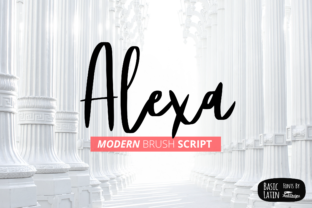
Testing Alexa in a hero section was the first step. I placed it over a subtle image background to see how it interacted with the design. The font’s fluid strokes and soft edges gave the page a warm, inviting feel. It wasn’t too bold or too delicate—just right for a brand that wants to stand out but still feel approachable.
Visual Characteristics of Alexa
Alexa has a natural, organic flow that feels handcrafted. Its letterforms are slightly irregular, which gives it an authentic, human quality. This makes it ideal for logos, creative portfolios, and branding projects that aim for a personal connection with the audience.
The font’s style leans toward elegance and simplicity. It doesn’t have the ornate flourishes of traditional script fonts, which makes it more versatile for digital use. Whether paired with a clean sans serif or used on its own, Alexa maintains a sense of sophistication without being overwhelming.
Realistic Use Cases for Alexa
On a coaching website, I used Alexa for the main headline. It added a sense of trust and professionalism while keeping the design modern. For a product landing page, I applied it to the call-to-action button. The result was a visually engaging element that stood out without clashing with the rest of the layout.
In a blog redesign, Alexa worked well for the header. It complemented the content without distracting from it. When designing a promotional landing page, I used it for short phrases and taglines. The font’s readability made it easy for users to scan the page quickly and find the key message.
Readability and Layout Considerations
One of the first things I checked was how Alexa performed on mobile screens. Its strokes are wide enough to remain legible at smaller sizes, but not so bold that they overpower the design. On a responsive layout, it maintained clarity across different device sizes, which is essential for a seamless user experience.
I also tested it on dark backgrounds and found that it still held up well. On light backgrounds, it provided good contrast without needing additional adjustments. When placed over images, it worked best when the background was simple or had a subtle texture to avoid visual clutter.
Font Pairing and Design Balance
Alexa pairs well with simpler typefaces. I often combine it with a clean sans serif for body text. This creates a balanced hierarchy that guides the reader through the content while keeping the design cohesive. For editorial-style websites, pairing it with a serif font adds depth and a more traditional feel.
When using Alexa for logos or decorative accents, I keep it minimal. Too much of it can make a design feel busy. Instead, I use it for key elements like headings, buttons, and short labels. This ensures it remains a focal point without becoming a distraction.
Practical Tips for Using Alexa
Before implementing Alexa on a project, I always check the available styles and weights. Having multiple options allows for better typographic control. I also verify the webfont availability and file formats to ensure it works across different platforms and browsers.
For multilingual support, I look at whether the font includes characters for other languages. This is especially important for global brands or websites targeting diverse audiences. Commercial licensing is another consideration—I want to make sure it’s suitable for both personal and client projects.
Overall, Alexa is a versatile font that adds personality to digital designs. Its modern, handwritten style makes it ideal for web projects that need a fresh, creative edge. Whether used in a portfolio, online store, or marketing campaign, it enhances the visual appeal without compromising usability.
As a designer, I appreciate fonts that offer flexibility and character. Alexa delivers on both fronts, making it a valuable addition to any digital toolkit. By focusing on readability, layout performance, and brand consistency, it helps create a more polished and engaging online experience.