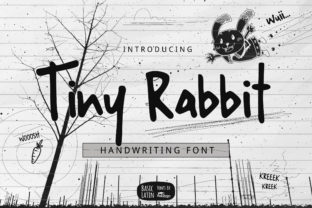
Tiny Rabbit Font for Business Branding
As a small business owner, I’ve always believed that the little details make a big difference. When it came time to update my bakery’s packaging, I knew I needed something that felt personal and approachable—something that made our brand stand out without being too flashy. That’s when I discovered Tiny Rabbit, a handwritten font with a playful yet professional vibe.
Tiny Rabbit has this warm, down-to-earth feel that makes it perfect for businesses looking to connect with their audience on a more human level. It’s not too fancy, not too casual—it just feels right. Whether you’re designing a logo, labeling a product, or creating social media graphics, this font adds a touch of personality that can’t be replicated with a standard typeface.
How Tiny Rabbit Transformed My Bakery Brand
One of the first things I did was update our packaging. Our old labels were pretty basic—just a simple sans serif font that didn’t really reflect the care we put into our baked goods. With Tiny Rabbit, I was able to create a more cohesive look that felt like part of our brand story. The font’s soft curves and slightly irregular shape gave the labels a handmade quality that customers loved.
It wasn’t just about the look, though. Tiny Rabbit also helped us communicate our brand values more clearly. We wanted to show that we were a small, local business that cared about quality and craftsmanship. Using this font in our packaging and marketing materials made that message more tangible.
Where to Use Tiny Rabbit in Your Business
Tiny Rabbit is incredibly versatile. I’ve used it for everything from our website banners to our thank-you cards. It works well as a headline font, especially when paired with a clean sans serif. For example, I use it for our blog titles and social media posts, while keeping a modern sans serif for body text. This pairing gives a nice contrast that keeps the design from feeling too busy.
It also shines on product labels. Whether it’s a candle jar, skincare product, or a handmade item, Tiny Rabbit adds a personal touch that makes your brand feel more authentic. I’ve even used it for our café menus, where its readability and charm help set the tone for a cozy, welcoming space.
Another area where Tiny Rabbit really stands out is in digital ads and social media graphics. On mobile screens, it maintains clarity without looking too small or hard to read. I’ve used it for Instagram post captions and promotional banners, and it always gets a positive response from our followers.
Why Typography Matters for Small Businesses
Typography isn’t just about making things look good—it’s about how your brand is perceived. A well-chosen font can make your business feel more trustworthy, professional, and memorable. Tiny Rabbit does all of that while still maintaining a friendly, approachable feel.
When customers see consistent typography across your packaging, website, and social media, they start to recognize your brand more easily. This consistency helps build trust and loyalty over time. Plus, it makes your business look more polished, which can lead to more sales and repeat customers.
Best Practices for Using Tiny Rabbit
While Tiny Rabbit is a great choice for headlines and display text, it’s not always the best option for long paragraphs. For body text, I recommend pairing it with a clean sans serif or a simple serif font. This ensures that your content remains easy to read without losing the personality of your brand.
When using Tiny Rabbit on small labels or printed packaging, keep the text size large enough to be legible. On mobile screens, avoid using it for anything longer than a few words. It’s also a good idea to check the font’s multilingual support if you plan to use it in different markets.
Before using any font in a commercial setting, make sure you understand the licensing terms. Tiny Rabbit comes with clear commercial use rights, which is important if you’re planning to use it on products, packaging, or client work.
Pairing Tiny Rabbit with Other Fonts
One of the things I love most about Tiny Rabbit is how well it pairs with other fonts. I often use it alongside a classic serif font for a more elegant look, or with a modern sans serif for a clean, minimalist aesthetic. These combinations help balance the playfulness of Tiny Rabbit with the professionalism of other typefaces.
If you’re working on a project that needs a bit more visual interest, try using Tiny Rabbit as a decorative accent. It works great for stickers, banners, and custom illustrations. Just remember to keep it simple—less is often more when it comes to typography.
Final Thoughts on Tiny Rabbit
Choosing the right font can be a game-changer for your business. Tiny Rabbit has helped me create a more consistent and memorable brand identity, and I’ve seen how it can elevate the look of any design project. Whether you’re a baker, a candle seller, or a boutique owner, this font offers a unique way to express your brand’s personality while maintaining a professional appearance.
As I continue to grow my business, I know I’ll keep using Tiny Rabbit for all kinds of design work. It’s more than just a font—it’s a tool that helps me tell my brand’s story in a way that feels genuine and authentic.