Jeconia: A Elegant Handwritten Font
Choosing the right font for a blog header can feel like selecting the perfect accessory for an outfit—subtle yet impactful. When I recently redesigned my lifestyle blog, I found myself drawn to Jeconia, a graceful handwritten script that added just the right amount of personality without overwhelming the design.
The Character of Jeconia
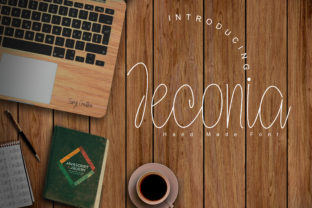
Jeconia carries a soft, personal touch that feels both authentic and refined. Its flowing lines and subtle variations in stroke weight give it a natural, handcrafted quality. This makes it ideal for projects that aim to convey warmth, creativity, or a sense of intimacy. Whether used in a magazine cover or a recipe ebook title, Jeconia brings a human element to the design.
Its rhythm is smooth and easy on the eyes, making it suitable for short text blocks like headlines, pull quotes, or decorative accents. However, its expressive nature means it’s best reserved for display purposes rather than long-form body text.
Real-World Applications
In a recent project, I used Jeconia for the header of a printable planner. The font’s elegance complemented the minimalist layout while adding a touch of sophistication. It worked especially well when paired with a clean sans serif font for the body copy, creating a balanced visual hierarchy.
For a wedding guide I was designing, Jeconia proved to be a perfect fit for section headings and pull quotes. Its organic flow gave the document a romantic, personalized feel that aligned with the theme of the publication.
I also tested Jeconia in a newsletter graphic. The font added a unique flair to the headline, drawing attention without being too distracting. It paired beautifully with a simple serif font for the subheadings, reinforcing the editorial tone of the content.
Readability and Practical Use
While Jeconia excels in display settings, it’s important to consider its readability in different formats. On screens, especially smaller mobile devices, the font may appear less crisp compared to more structured typefaces. For print materials, it holds up well, particularly when used at larger sizes.
When used in PDFs or downloadable content, Jeconia maintains its character, making it a solid choice for digital products like worksheets, course materials, or e-books. However, for dense paragraphs or small captions, a more legible font would be preferable.
Font Pairing and Design Considerations
Jeconia pairs well with both serif and sans serif fonts, depending on the desired aesthetic. For a classic look, pairing it with a traditional serif font like Georgia or Garamond can create a timeless, elegant feel. For a modern twist, a clean sans serif like Lato or Open Sans offers contrast and clarity.
When using Jeconia in editorial layouts, it’s helpful to take advantage of its alternate characters and ligatures. These features allow for more nuanced typography, especially when working with longer text blocks or decorative elements.
Before integrating Jeconia into any project, it’s wise to check the font’s licensing terms, especially if it will be used in commercial contexts such as ebooks, templates, or client work. Ensuring proper usage rights helps avoid potential legal issues down the line.
Jeconia in Editorial Design
As a premium font, Jeconia offers a level of quality that stands out in a sea of generic typefaces. Its versatility makes it a valuable addition to any designer’s toolkit, particularly for those focused on branding, packaging, or social media graphics.
Whether you’re creating a coaching workbook, a digital magazine, or a course PDF, Jeconia can help establish a cohesive brand identity. Its personality aligns well with creative industries that value authenticity and style.
For content creators looking to elevate their publications, Jeconia provides a way to infuse personality into every design element. From blog headers to chapter openers, it adds a layer of refinement that enhances the overall reading experience.
Ultimately, Jeconia is not just a font—it’s a tool for storytelling. Its soft, handwritten charm invites readers to engage with the content on a more personal level, making it an excellent choice for projects that aim to connect with their audience.